




 Live Chat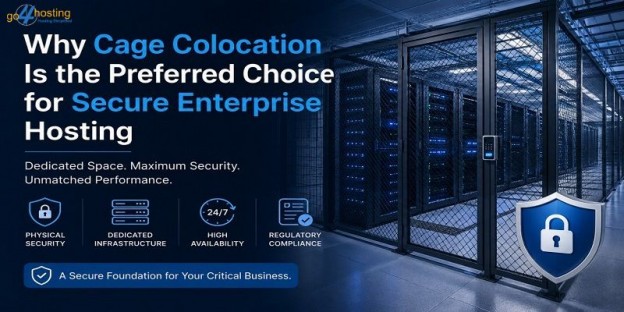
Table of Content
- What Is Cage Colocation?
- Why Security Matters in Enterprise Hosting
- Key Features of Cage Colocation
- Benefits of Cage Colocation for Enterprises
- Cage Colocation vs Shared Rack Colocation
- How Dedicated Server Deployments Benefit from Cage Colocation
- Industries That Benefit Most from Cage Colocation
- How to Choose the Right Cage Colocation Provider
- Best Practices for Managing Cage Colocation
- Conclusion
As enterprises continue to digitize their operations, the demand for secure, scalable, and high-performance IT infrastructure has grown significantly. According to industry reports, the global data center colocation market is expected to surpass USD 100 billion within the next few years, driven by cloud adoption, AI workloads, and stricter compliance requirements. As organizations handle larger volumes of sensitive business data, choosing the right hosting environment has become a strategic decision rather than just an IT requirement.
Among the various colocation options available today, Cage Colocation has emerged as a preferred solution for businesses that require dedicated physical security, operational control, and regulatory compliance. Unlike shared rack environments, cage colocation provides an enclosed and restricted area within a data center where only authorized personnel can access the infrastructure. As a result, enterprises gain greater confidence in protecting mission-critical workloads.
In this blog, we will explore why Cage Colocation is the preferred choice for secure enterprise hosting. We will discuss its features, security advantages, business benefits, ideal use cases, and how it compares with other hosting options. Additionally, we will explain how organizations can combine Dedicated Server deployments with cage colocation to build a reliable and future-ready infrastructure.
What Is Cage Colocation?
Cage Colocation is a premium data center service where an organization leases a physically enclosed and secured space within a colocation facility. Instead of placing servers in a shared rack environment, businesses receive a dedicated cage surrounded by secure fencing and controlled access systems.
The cage may contain multiple server racks, storage systems, networking equipment, and security appliances. Since the infrastructure is physically isolated, enterprises can implement their own security policies while benefiting from enterprise-grade power, cooling, connectivity, and monitoring provided by the data center.
This model is widely adopted by enterprises handling confidential customer information, financial transactions, healthcare records, and mission-critical applications.
Why Security Matters in Enterprise Hosting
Modern businesses face increasingly sophisticated cyber threats. However, digital security alone is no longer enough. Physical security remains equally important because unauthorized access to servers can result in data theft, service disruption, and compliance violations.
Organizations operating in regulated industries must also meet strict standards related to physical infrastructure protection. Therefore, selecting a hosting solution with multiple layers of physical security has become essential.
This is where Cage Colocation provides a significant advantage.
Key Features of Cage Colocation
Physical Isolation
Unlike shared hosting environments, cage colocation offers a completely enclosed infrastructure area. Only approved personnel can enter the cage, reducing the risk of accidental or unauthorized access.
Multi-Layer Security
Most enterprise-grade data centers combine several security mechanisms, including:
- Biometric authentication
- RFID or smart card access
- CCTV surveillance
- Security guards
- Visitor logging
- Mantrap entry systems
- 24×7 monitoring
Together, these security layers provide comprehensive protection for enterprise infrastructure.
Dedicated Infrastructure Space
Businesses can install multiple racks, storage devices, firewalls, switches, and networking equipment inside the same cage. Consequently, infrastructure expansion becomes easier without relocating equipment.
High Availability
Enterprise colocation facilities typically provide:
- Redundant power supplies
- Backup generators
- Precision cooling
- Multiple internet carriers
- Fire suppression systems
As a result, organizations achieve maximum uptime for critical applications.
Benefits of Cage Colocation for Enterprises
Enhanced Physical Security
The biggest advantage of Cage Colocation is enhanced physical protection. Since equipment remains inside a locked enclosure, businesses gain greater control over who can access their infrastructure.
Moreover, every access event is typically recorded, improving accountability.
Better Regulatory Compliance
Many industries must comply with regulations regarding infrastructure security.
For example:
- Healthcare organizations
- Financial institutions
- Government agencies
- E-commerce companies
- SaaS providers
A secured cage environment helps support compliance initiatives by strengthening physical access controls.
Improved Infrastructure Management
A dedicated cage allows IT teams to organize servers efficiently.
Instead of sharing space with other organizations, businesses can:
- Arrange racks logically
- Improve cable management
- Separate production and backup systems
- Install custom networking hardware
Consequently, maintenance becomes simpler and operational efficiency improves.
Greater Scalability
Business requirements change over time.
Fortunately, cage colocation makes future expansion easier because organizations can add:
- More server racks
- Additional storage
- High-speed networking equipment
- GPU servers
- AI infrastructure
Therefore, companies avoid costly infrastructure migrations.
Reliable Business Continuity
Enterprise applications require uninterrupted availability.
Since professional colocation facilities provide redundant infrastructure, organizations experience fewer outages caused by power failures, cooling issues, or network interruptions.
As a result, business continuity improves significantly.
| Feature | Cage Colocation | Shared Rack Colocation |
|---|---|---|
| Physical Security | Private enclosed cage | Shared environment |
| Access Control | Dedicated authorized access | Shared facility access |
| Privacy | High | Moderate |
| Scalability | Excellent | Limited |
| Compliance Support | Strong | Basic |
| Best For | Large enterprises | Small businesses |
Although shared rack colocation is suitable for smaller deployments, enterprises with sensitive workloads generally prefer Cage Colocation because it offers greater privacy and control.
How Dedicated Server Deployments Benefit from Cage Colocation
Many organizations deploy a Dedicated Server within a cage colocation environment to maximize both performance and security.
A Dedicated Server provides exclusive computing resources without sharing CPU, RAM, or storage with other tenants. When combined with cage colocation, businesses receive both dedicated hardware and dedicated physical security.
This combination is particularly beneficial for:
- Enterprise applications
- Financial systems
- ERP platforms
- AI workloads
- Database servers
- High-performance computing
- Virtualization clusters
Furthermore, organizations maintain complete control over hardware configurations while leveraging enterprise-grade data center facilities.
Industries That Benefit Most from Cage Colocation
Several industries require higher infrastructure security than standard hosting environments.
These include:
Banking and Financial Services
Financial institutions process highly sensitive customer information and transactions every day. Therefore, they require secure infrastructure with strict access control.
Healthcare
Hospitals and healthcare providers must protect patient records and maintain regulatory compliance. Cage colocation helps strengthen physical security.
Government Organizations
Government agencies often manage confidential information that demands restricted physical access.
E-commerce
Online retailers process payment information, customer databases, and inventory systems. Consequently, they require reliable and secure hosting.
AI and Technology Companies
Organizations developing AI models frequently deploy high-density GPU infrastructure. Cage colocation offers the space, power, and cooling required for these advanced environments.
How to Choose the Right Cage Colocation Provider
Before selecting a provider, evaluate the following factors:
Data Center Certifications
Look for internationally recognized certifications that demonstrate operational excellence and security standards.
Network Connectivity
Choose facilities offering multiple network carriers for higher redundancy and lower latency.
Security Infrastructure
Ensure the provider offers:
- Biometric authentication
- CCTV monitoring
- 24×7 security personnel
- Visitor management
- Restricted cage access
Power and Cooling
Reliable redundant power systems and precision cooling help maintain maximum uptime.
Remote Hands Support
A quality provider should offer experienced technicians who can perform maintenance when your IT team cannot visit the facility.
Best Practices for Managing Cage Colocation
To maximize the value of your deployment:
- Maintain updated access control policies.
- Monitor infrastructure continuously.
- Use redundant networking equipment.
- Document every hardware change.
- Implement proper cable management.
- Schedule preventive maintenance regularly.
- Combine physical security with cybersecurity measures.
Following these practices helps improve operational efficiency while reducing risks.
Conclusion
As enterprise workloads continue to grow, infrastructure security has become more important than ever. While cybersecurity protects digital assets, physical security remains equally critical. Cage Colocation addresses this challenge by providing dedicated, access-controlled space within enterprise-grade data centers.
Moreover, organizations benefit from enhanced compliance, improved scalability, higher uptime, and better infrastructure management. When paired with a Dedicated Server, cage colocation delivers an ideal combination of performance, control, and security for mission-critical applications.
For businesses seeking a reliable hosting solution that supports long-term growth while safeguarding valuable data, Cage Colocation remains one of the most effective choices for secure enterprise hosting.
