






 Live Chat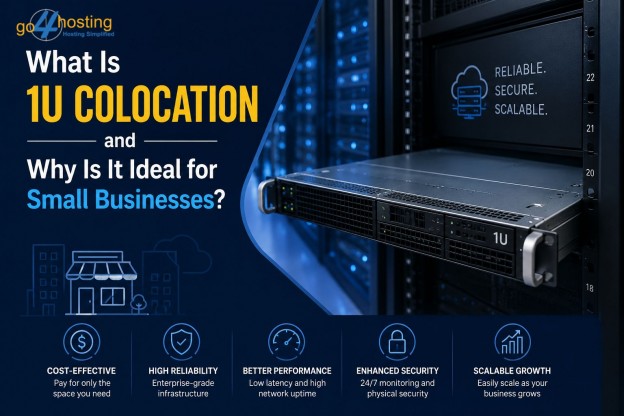
Table of Content
- What Is 1U Colocation?
- How Does 1U Colocation Work?
- Key Features of 1U Colocation
- Why Is 1U Colocation Ideal for Small Businesses?
- Benefits of 1U Colocation for Growing Companies
- 1U Colocation vs Traditional On-Premises Hosting
- Factors to Consider When Choosing a 1U Colocation Provider
- Common Use Cases of 1U Colocation
- Conclusion
As businesses continue to adopt digital technologies, the demand for reliable and secure server hosting solutions is increasing. One such solution is 1U Colocation, a service that allows organizations to place a single rack unit (1U) server in a professional data center. Instead of maintaining costly on-premises infrastructure, businesses can leverage enterprise-grade facilities with high-speed connectivity, power redundancy, and advanced security features.
The global data center industry is experiencing rapid growth due to cloud computing, AI adoption, and increasing data generation. According to industry reports, businesses are investing heavily in data center services to improve performance and reduce operational risks. Moreover, small and medium-sized enterprises (SMEs) are increasingly choosing colocation services because they offer enterprise-level infrastructure without the expense of building and managing a dedicated server room.
What Is 1U Colocation?
1U Colocation is a type of colocation service where a customer rents space for a single rack unit server in a data center. The term “1U” refers to a standardized server height of 1.75 inches within a server rack.
In this model, the business owns the server hardware, while the data center provides:
- Rack space
- Power supply
- Cooling systems
- Network connectivity
- Physical security
- Technical support
As a result, organizations gain access to a highly reliable hosting environment without investing in expensive infrastructure.
How Does 1U Colocation Work?
The process of using 1U Colocation is straightforward.
Step 1: Purchase a 1U Server
The business acquires a server that fits the standard 1U rack size.
Step 2: Select a Colocation Provider
Next, the organization chooses a data center offering 1U Colocation services.
Step 3: Install the Server
The server is shipped or delivered to the facility and mounted in a rack.
Step 4: Connect to Network and Power
The provider supplies redundant power and high-speed internet connectivity.
Step 5: Remote Management
Businesses can monitor, manage, and maintain their servers remotely using secure access tools.
Consequently, organizations can operate their applications efficiently without maintaining physical infrastructure onsite.
Key Features of 1U Colocation
Enterprise-Grade Infrastructure
Data centers are designed with advanced power, cooling, and network systems. Therefore, businesses benefit from a highly stable environment.
Redundant Power Supply
Most facilities include UPS systems and backup generators. As a result, servers remain operational even during power outages.
High-Speed Connectivity
Colocation providers offer multiple network carriers and high-bandwidth internet connections.
Physical Security
Data centers use surveillance cameras, biometric access controls, and security personnel to protect equipment.
Remote Hands Support
Many providers offer on-site technicians who can assist with hardware troubleshooting and maintenance tasks.
Why Is 1U Colocation Ideal for Small Businesses?
Small businesses often have limited budgets and IT resources. However, they still require reliable infrastructure to support websites, applications, and databases.
Cost-Effective Hosting Solution
Building an in-house server room can be expensive. Businesses must invest in cooling systems, power backup, security, and networking equipment.
With 1U Colocation, these costs are shared among multiple customers. Consequently, organizations gain access to enterprise infrastructure at a fraction of the cost.
Improved Reliability
Downtime can negatively impact business operations and customer trust.
Since professional data centers are built for maximum uptime, 1U Colocation helps businesses maintain continuous service availability.
Enhanced Security
Protecting business data is a top priority.
Colocation facilities implement multiple layers of physical and network security. Therefore, sensitive information remains protected against unauthorized access.
Scalability
As businesses grow, infrastructure requirements also increase.
Fortunately, organizations can easily upgrade from a single 1U server to larger colocation configurations without relocating their equipment.
Better Performance
Data centers provide optimized network connectivity and environmental controls. As a result, applications perform more efficiently than they often do in office-based server environments.
Benefits of 1U Colocation for Growing Companies
Reduced Operational Costs
Businesses save money on electricity, cooling, maintenance, and infrastructure upgrades.
Greater Control Over Hardware
Unlike cloud hosting, organizations retain full ownership and control of their servers.
Business Continuity
Redundant systems minimize the risk of downtime caused by hardware failures or utility disruptions.
Professional IT Environment
Companies benefit from enterprise-grade facilities that would otherwise be difficult to afford independently.
Faster Network Access
Low-latency internet connections help improve application performance and user experience.
1U Colocation vs Traditional On-Premises Hosting
| Feature | 1U Colocation | On-Premises Hosting |
|---|---|---|
| Infrastructure Cost | Low | High |
| Power Redundancy | Included | Requires Investment |
| Cooling Systems | Included | Self-Managed |
| Physical Security | Advanced | Limited |
| Scalability | Easy | Challenging |
| Maintenance Support | Available | Internal Team Required |
As shown above, 1U Colocation offers several advantages over traditional server hosting methods.
Factors to Consider When Choosing a 1U Colocation Provider
Data Center Location
Select a facility close to your users or business operations to reduce latency.
Uptime Guarantee
Look for providers offering Service Level Agreements (SLAs) with uptime commitments of 99.9% or higher.
Network Connectivity
Evaluate bandwidth options and carrier diversity.
Security Measures
Ensure the provider uses advanced security systems, including surveillance and access controls.
Technical Support
Reliable support services can significantly reduce downtime and operational challenges.
Scalability Options
Choose a provider that can accommodate future growth requirements.
Common Use Cases of 1U Colocation
Many organizations utilize 1U Colocation for various workloads, including:
- Business websites
- E-commerce platforms
- Application hosting
- Email servers
- Database management
- Backup and disaster recovery systems
- Development and testing environments
Additionally, startups often use colocation services to access enterprise-grade infrastructure without large capital investments.
Conclusion
1U Colocation is an efficient and cost-effective hosting solution that allows businesses to place their servers in professional data centers while maintaining full control over their hardware. It combines enterprise-level reliability, security, connectivity, and scalability without the significant expenses associated with building an in-house server facility.
For small businesses, the advantages are especially valuable. Lower operational costs, enhanced uptime, improved security, and room for future growth make 1U Colocation an ideal choice for organizations seeking dependable IT infrastructure. As digital transformation continues to accelerate, adopting a reliable colocation strategy can help businesses improve performance, support growth, and maintain a competitive edge in the market.
